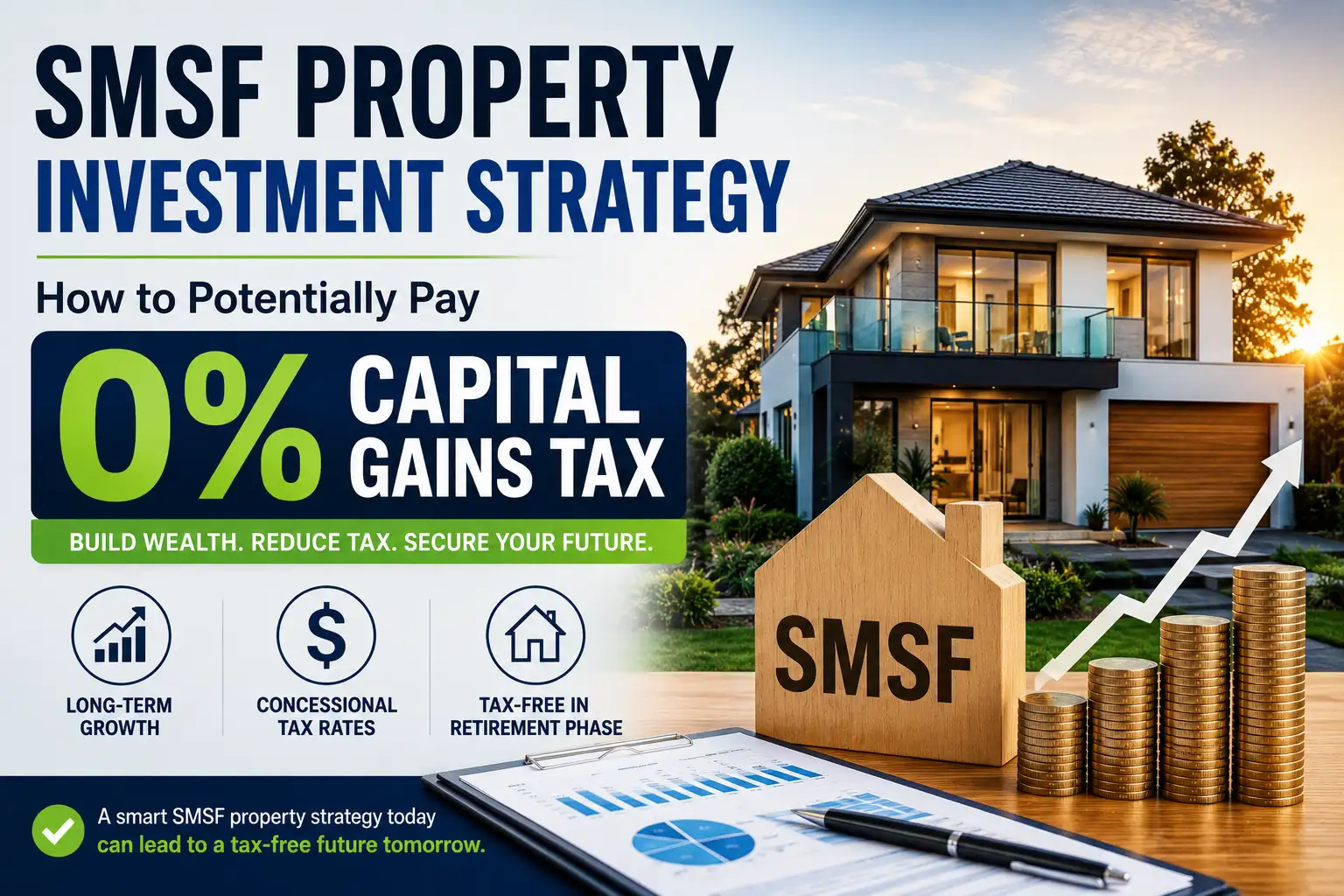
How an SMSF Can Build Wealth Through Long-Term Property Investment and Potentially Pay 0% Tax in Retirement
For many Australians, property remains one of the most effective long-term wealth creation strategies. When combined with the tax advantages available inside a Self-Managed Super Fund (SMSF), the results can be extremely powerful.
One of the most compelling strategies involves purchasing an investment property through an SMSF, holding it over the long term, and then selling the property once the fund moves into retirement phase — where capital gains tax can potentially reduce to 0%.
The Strategy Explained
An SMSF can purchase residential or commercial investment property, provided the investment complies with superannuation legislation and the fund’s investment strategy.
During the accumulation phase:
• Rental income is generally taxed at 15%• Capital gains are taxed at 10% if the property is held longer than 12 months
However, once members commence an account-based pension in retirement phase, earnings and capital gains supporting that pension can become tax-free.
Example Scenario
• Property purchase price: $850,000• Property held for: 20 years• Average Australian property growth rate: 6% per annum• Member retires at age 60• SMSF enters retirement phase before sale
Property Growth Projection
Using compound growth at 6% annually:
Future Value = 850,000 × (1.06)^20
Estimated future value after 20 years: $2,726,000
Capital Growth Achieved
Original Purchase Price: $850,000Estimated Value After 20 Years: $2,726,000Total Capital Gain: $1,876,000
Tax Outcomes Compared
Scenario 1 — Personal Ownership:Estimated capital gains tax could exceed approximately $440,000 – $470,000+
Scenario 2 — SMSF Accumulation Phase:Estimated capital gains tax approximately $187,600
Scenario 3 — SMSF Retirement Phase:Estimated capital gains tax: $0
Why This Strategy Can Be Powerful
The combination of long-term compounding growth, concessional super tax rates, and potential tax-free retirement earnings can create significantly more after-tax wealth compared to holding investments personally.
Important Considerations
• The property must satisfy the sole purpose test• Residential property generally cannot be lived in by members or related parties• Borrowing arrangements must comply with SMSF legislation• Liquidity and diversification requirements must be considered• Professional accounting, legal and lending advice is essential
An SMSF can provide a highly tax-effective structure for long-term property investment. By purchasing quality property assets early, holding them through decades of market growth, and selling after retirement begins, Australians may legally access one of the most powerful tax outcomes available: a potential 0% tax rate on capital gains.